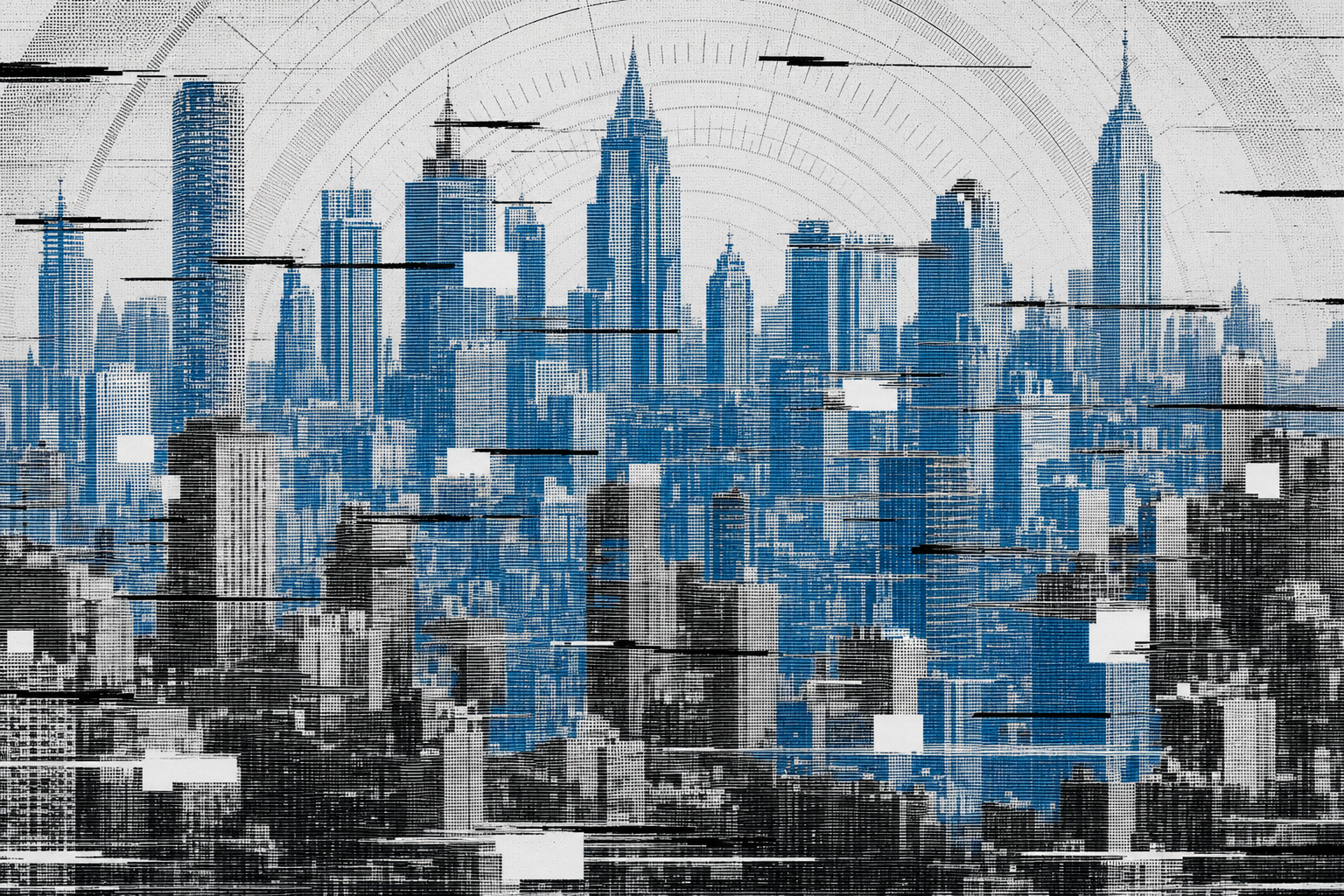
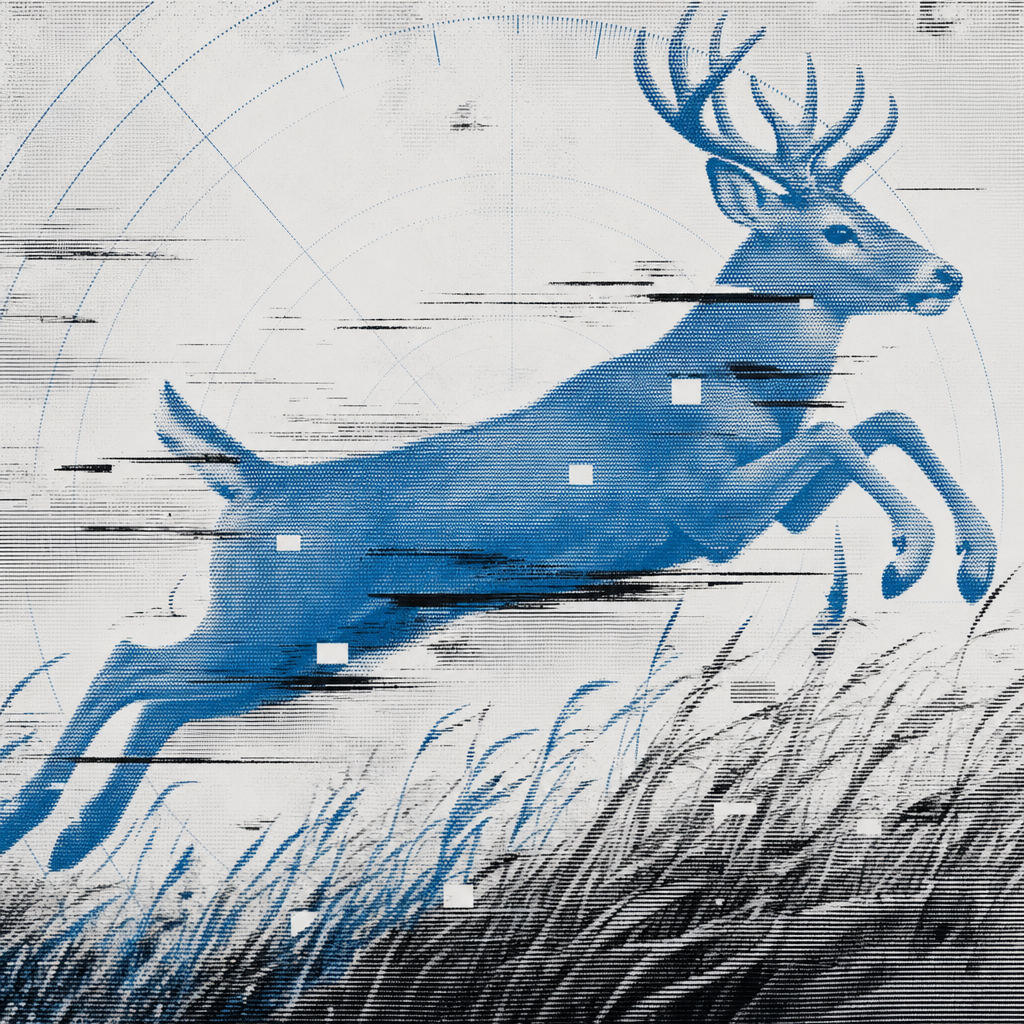
{subject}, in the style of a recovered fragment from a damaged optical disc — a forensic archive scan: the subject reconstructed from coarse halftone radial sector dots and fine horizontal scan-line interlacing, partially corrupted with thin sliced black data-loss scars cutting across asymmetrically and a few rectangular blocks dropped to pure white as missing sectors, faint concentric optical-sector arcs and radial tick marks ghosting behind the forms, {palette}, a single archival muted blue (#2F78A5) recovery tint washing across the most-intact regions while the rest stays black-ink on a cool frosted milk-white ground, crisp registration discipline, matte and restrained with no glow, {composition}, the subject filling the frame edge to edge. Absolutely NO text, NO letters, NO words, NO numbers, NO logos.
Slot recipes
hero — The subject filling the full bleed edge to edge, dense and immersive, halftone sector dots and scan-line interlacing across it, sliced black data-loss scars and a few dropped white sector blocks raking through the strongest forms, concentric optical-sector arcs ghosting behind, archival blue recovery tint on the most-intact regions.
feature — The subject large and centered, filling the frame, reconstructed from halftone sector dots with the archival-blue recovery tint reading as the highlight, a couple of sliced black scars and one or two dropped white sectors for material corruption.
avatar — A tight three-quarter portrait of the subject, face filling the frame, fine scan-line interlacing and halftone dots, thin sliced black scars across the features, a restrained archival-blue recovery tint on the intact half.
empty-state — The subject rendered quietly but still filling the frame, lighter halftone, only one or two faint sliced scars and a single dropped white sector, a barely-there archival-blue recovery tint — recovered but stabilized and calm.
illustration — A close study of the subject filling the frame, crisp halftone sector dots and scan-line interlacing, asymmetric sliced black scars and dropped white sectors, concentric sector arcs and radial ticks ghosting behind, one archival-blue recovery layer.