back to art styles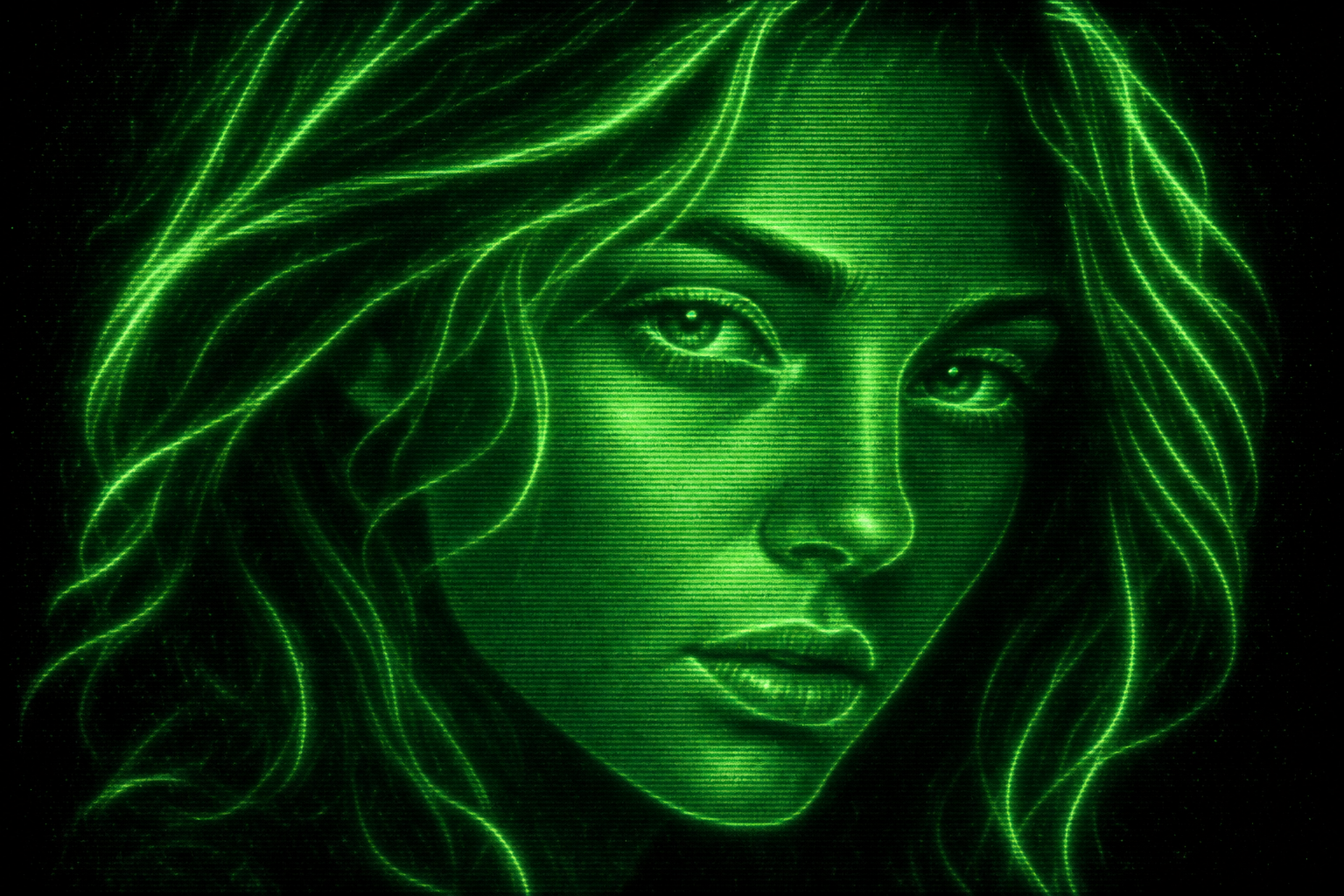
Art lane
Lumiphore
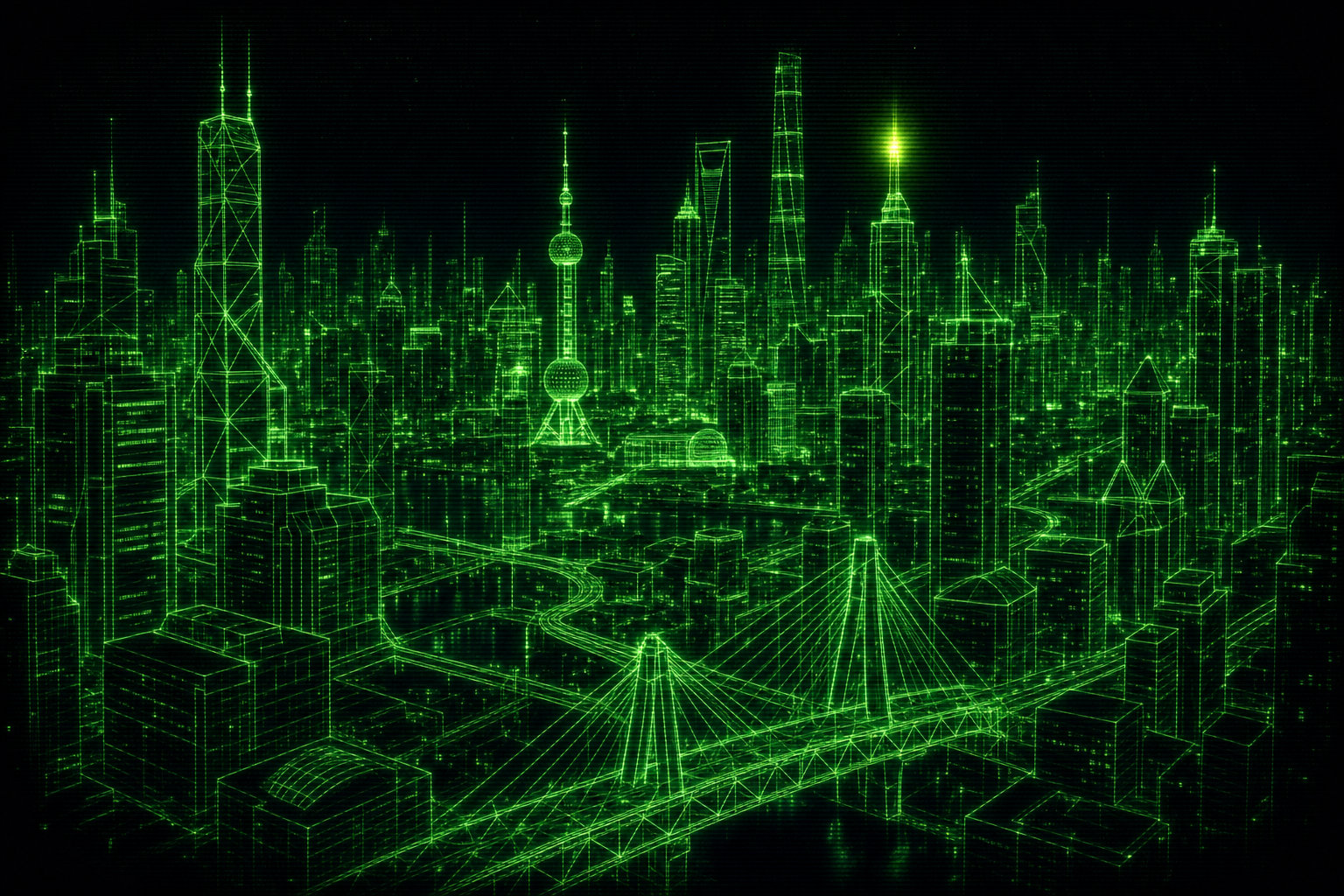
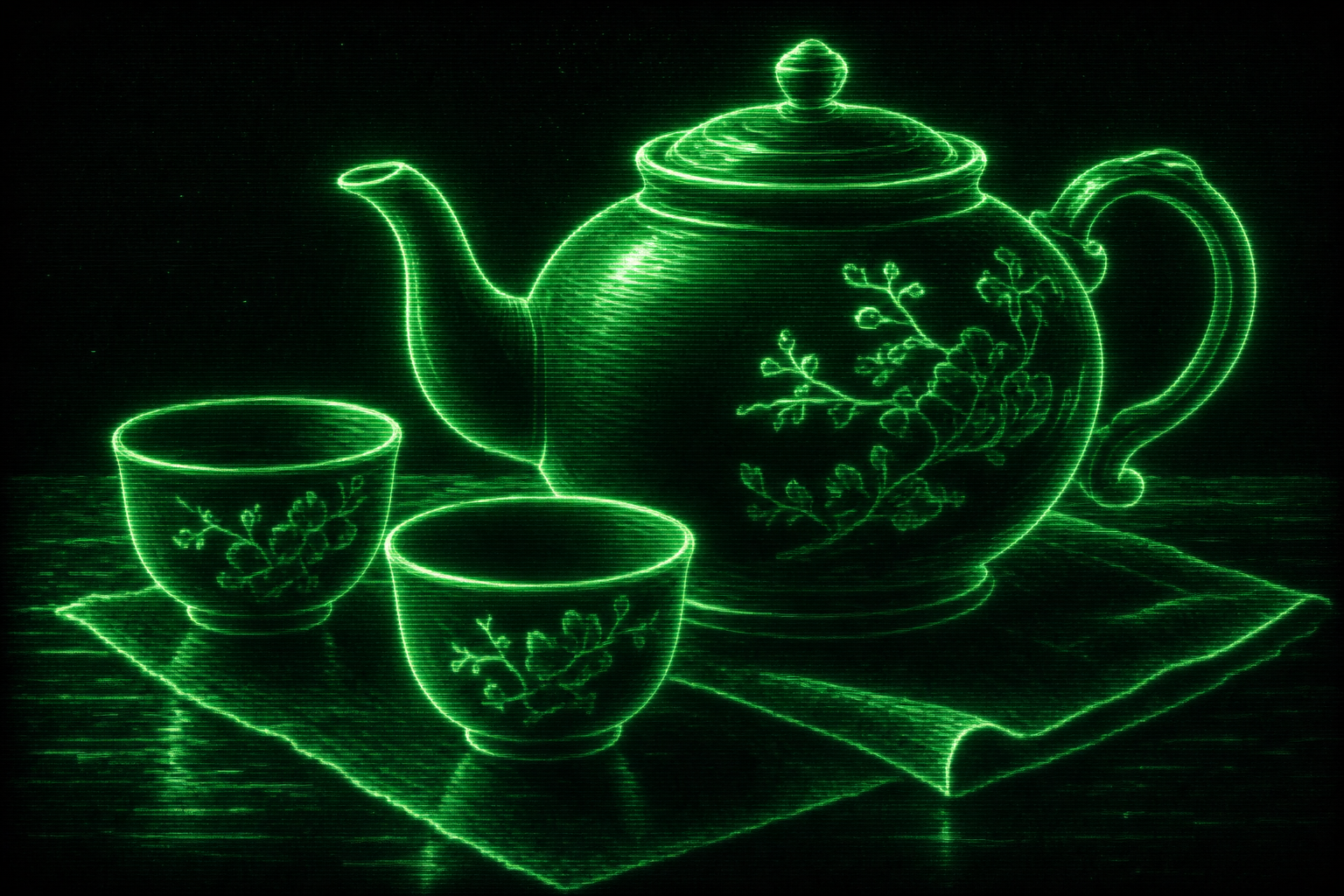
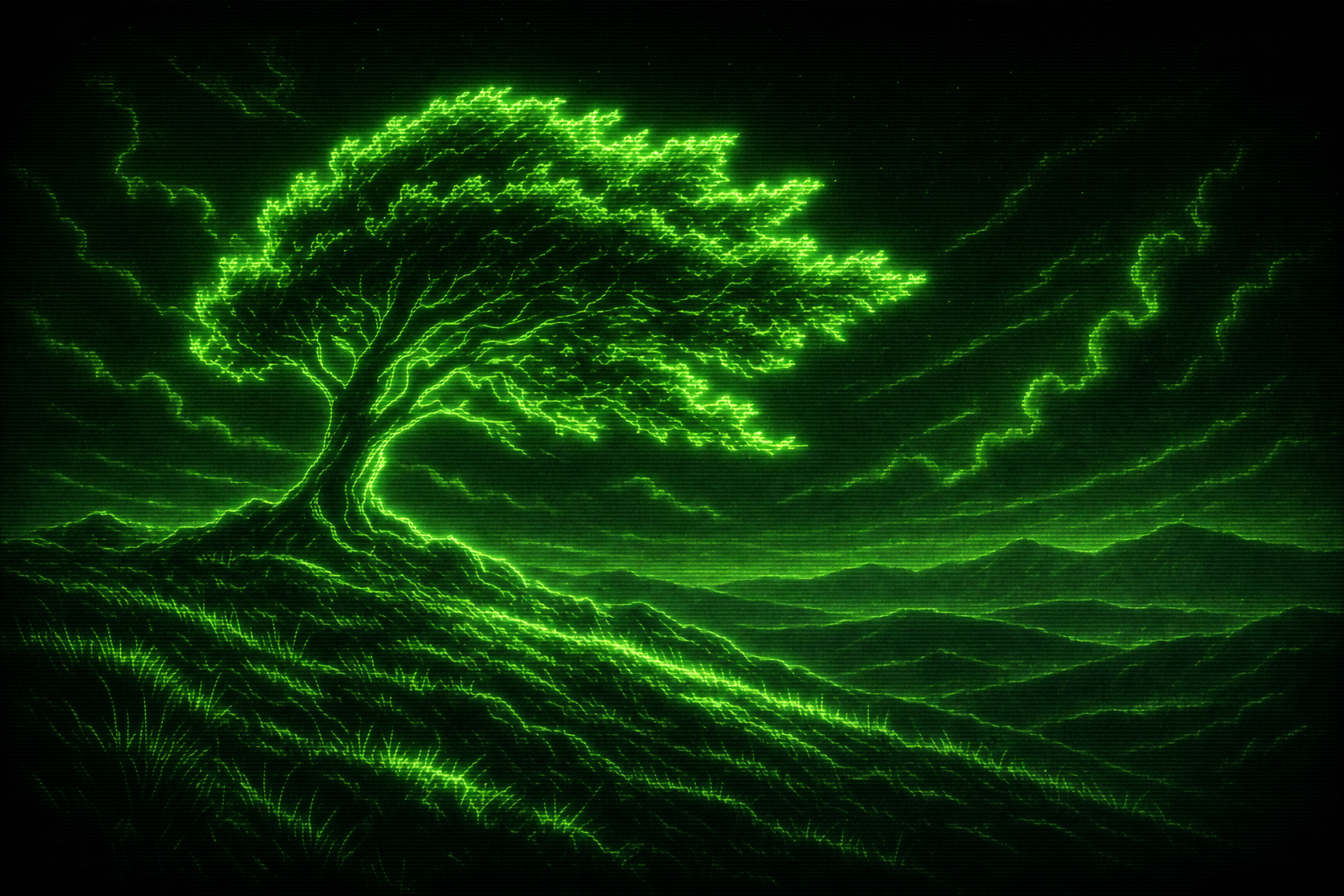
An engine-agnostic style recipe: a wide hero, proof shots across subjects, and a portable prompt.
1 hero · 3 proofs
Prompt template
{subject}, in the style of Lumiphore — rendered entirely as glowing phosphor-green CRT oscilloscope vector traces on a true-black field, the form drawn from luminous monochrome scan-strokes that bloom and halate at their edges, {palette}, bright strokes catching the near planes while dimmer strokes recede into depth, fine horizontal CRT scanlines crossing the whole frame, soft electron-beam bloom and halation glow, faint analog noise speckle and a gentle radial vignette, atmospheric and layered with phosphor falloff into the black, dimensional not flat, subject filling the frame edge to edgeSlot recipes
hero — {subject} as a full-bleed Lumiphore scene — a wide commanding subject rendered in glowing phosphor-green vector traces on true black, bright #7CFF7A foreground strokes blooming forward, dimmer #3AAE52 depth, scanlines and radial vignette across the full frame, atmospheric green haze, room at one side for an overlay headline without solid scrim
feature — {subject} centered and self-contained in the Lumiphore technique, glowing monochrome green scan-strokes on true black, balanced composition with phosphor falloff at the edges, subtle scanlines and bloom, reads clearly at card size
avatar — {subject} as a tight head-and-shoulders or single-object close-up in the Lumiphore technique, luminous green contour traces with bright rim bloom on true black, soft scanlines, centered, fills a square crop
empty-state — a single small {subject} drawn in sparse Lumiphore scan-strokes, mostly true-black field with a faint glowing green form and a dim scanline wash, quiet and low-energy, no text
illustration — an editorial {subject} composition in the Lumiphore technique, layered phosphor-green vector traces at varied brightness on true black, scanlines, bloom and noise speckle, atmospheric depth, dimensional and detailed across the full frame
phosphor-glowcrt-tracemonochrome-greenoscilloscopescanlines
Credits · in the lineage of
- Phosphor CRT / oscilloscope display technologyTraditionThe green-on-black electron-beam trace, scanline texture, and halation bloom are drawn from monochrome cathode-ray-tube and oscilloscope displays.
- Vector graphics arcade displays (Vectrex / Asteroids era)TraditionThe glowing line-art vector-trace rendering echoes early vector-scan vector monitors that drew images as luminous strokes rather than filled pixels.
A generated style is an aggregate of many influences — credit is given to the artists and traditions it draws on, not a claim of authorship.
images by gpt-image-2
Do
- · Render every subject as luminous green scan-strokes and contour traces — let the line itself glow, with brighter edges blooming and halating into the black.
- · Keep the ground true black (#020302) so the phosphor traces are the only light source; build depth by varying stroke brightness from #7CFF7A near to #3AAE52 far.
- · Lay fine horizontal CRT scanlines, a gentle radial vignette, and faint noise speckle across the whole frame so the image feels like an active monitor surface.
- · Fill the frame edge to edge with the subject and treat the technique as transferable — it should dress a face, a city, or a teapot equally.
Don't
- · Do not render flat loud silhouettes or solid color fills — the form must read as glowing traces with atmospheric falloff, never a poster cutout.
- · Do not introduce cyan, magenta, purple, or rainbow neon, or a synthwave gradient — stay monochrome phosphor green.
- · Do not draw the apparatus (monitor bezel, terminal window, scan-grid UI) or any text — the technique is the rendering, not the device.
- · Do not leave large empty white or letterboxed margins; keep the composition full-frame and edge to edge.
try it
remix with this style
Apply Lumiphore to any UI language and swap the palette — the preview takes this style's hero image.
Needs a Published language and palette to remix.