back to art styles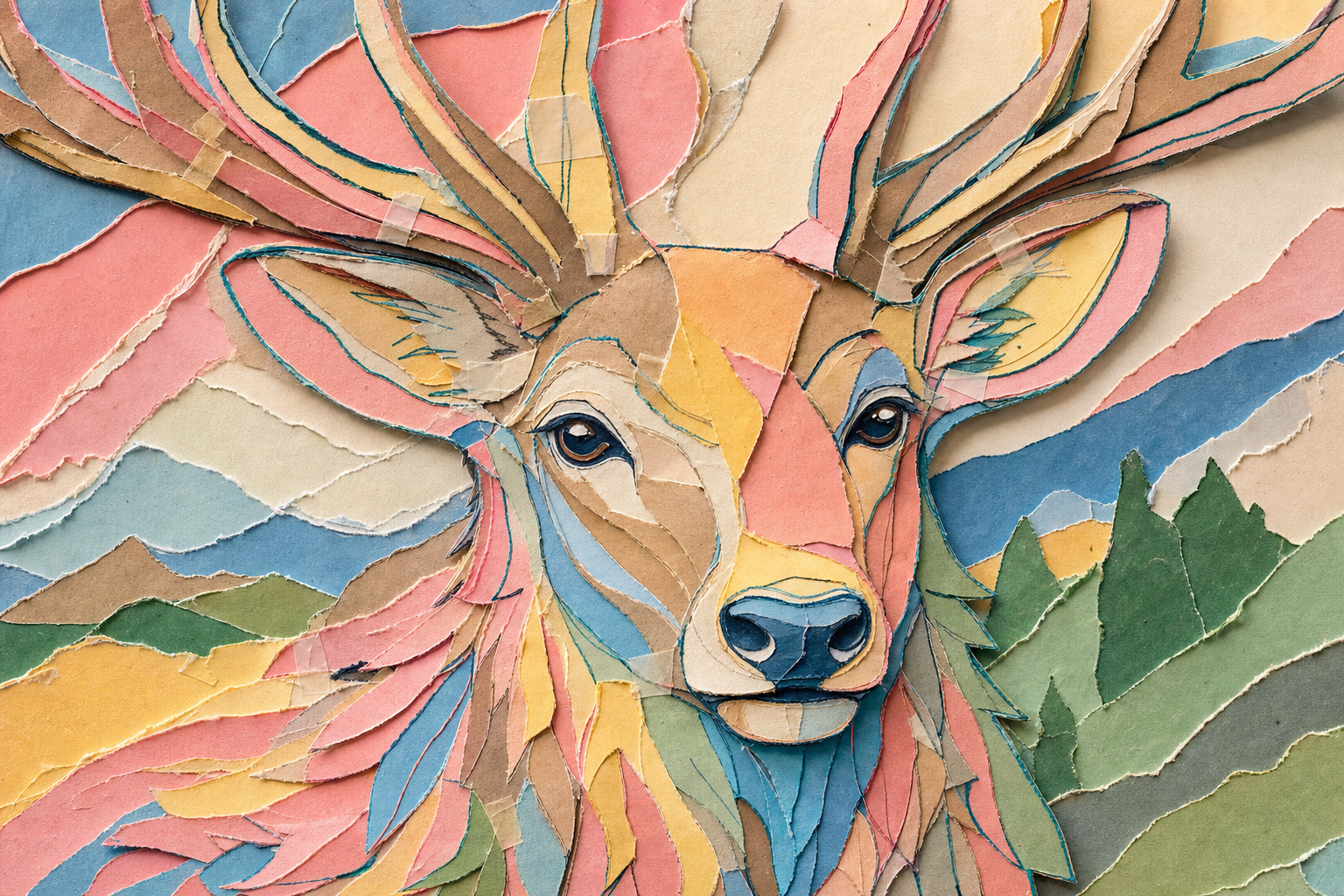
Art lane
Pasteup
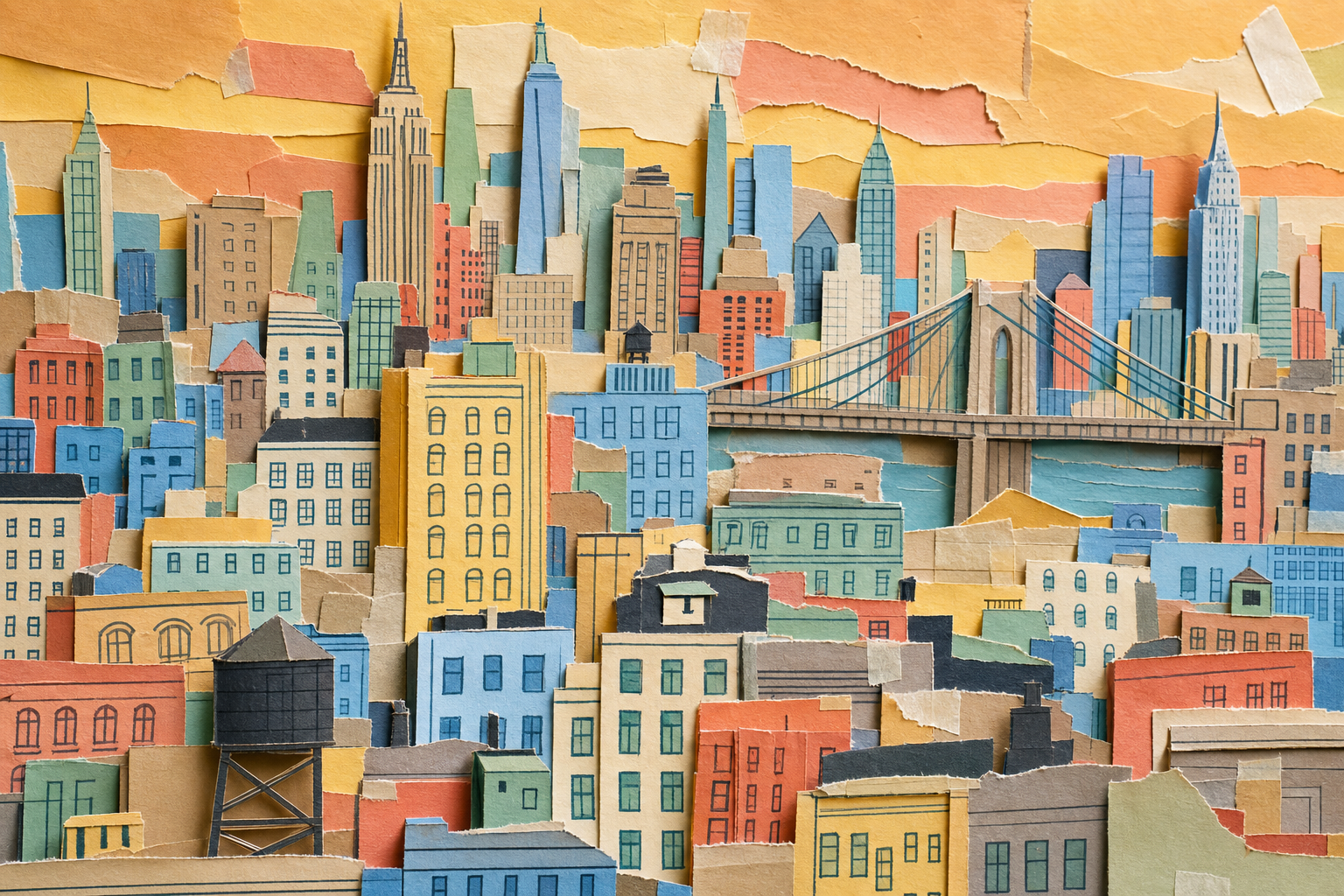
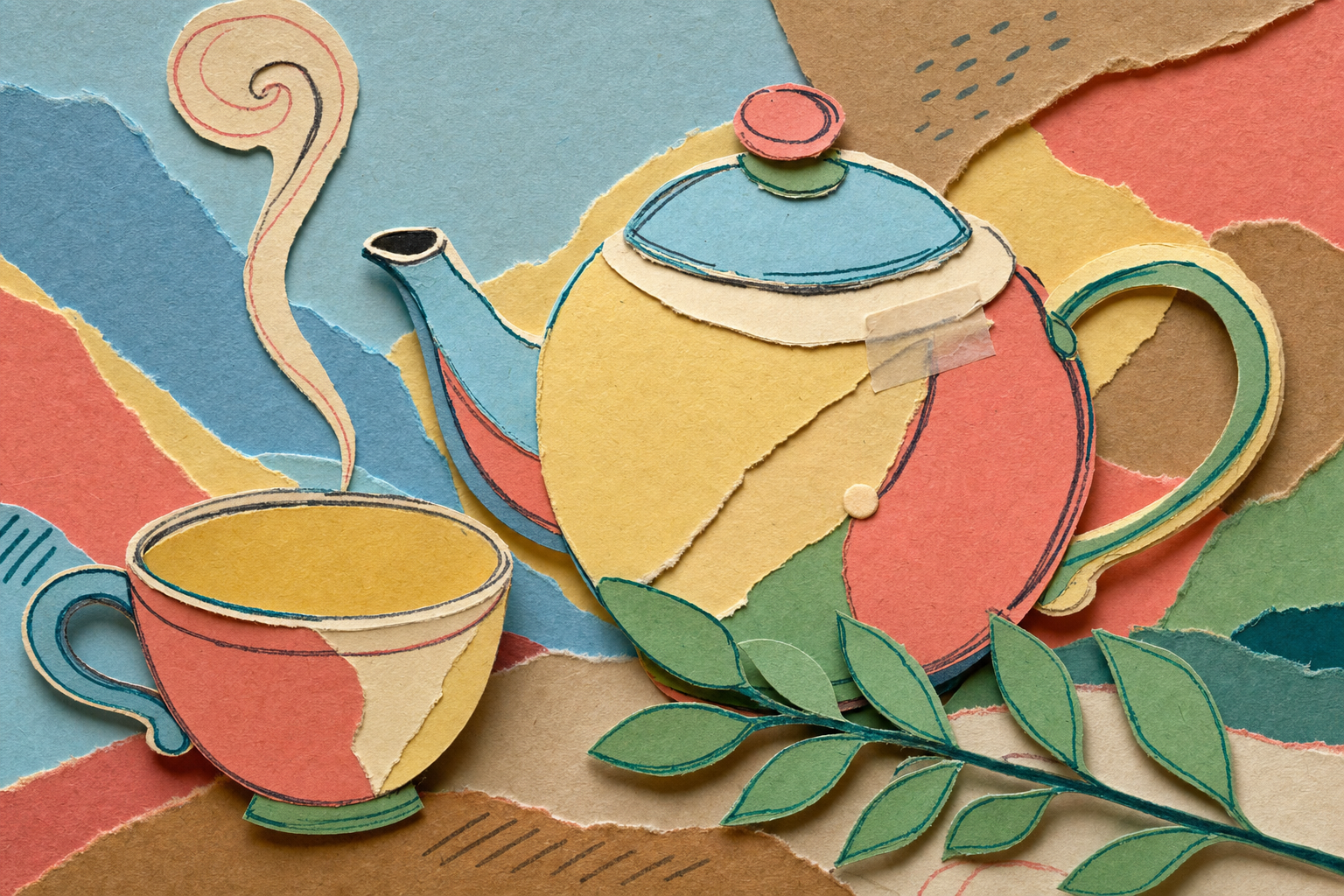
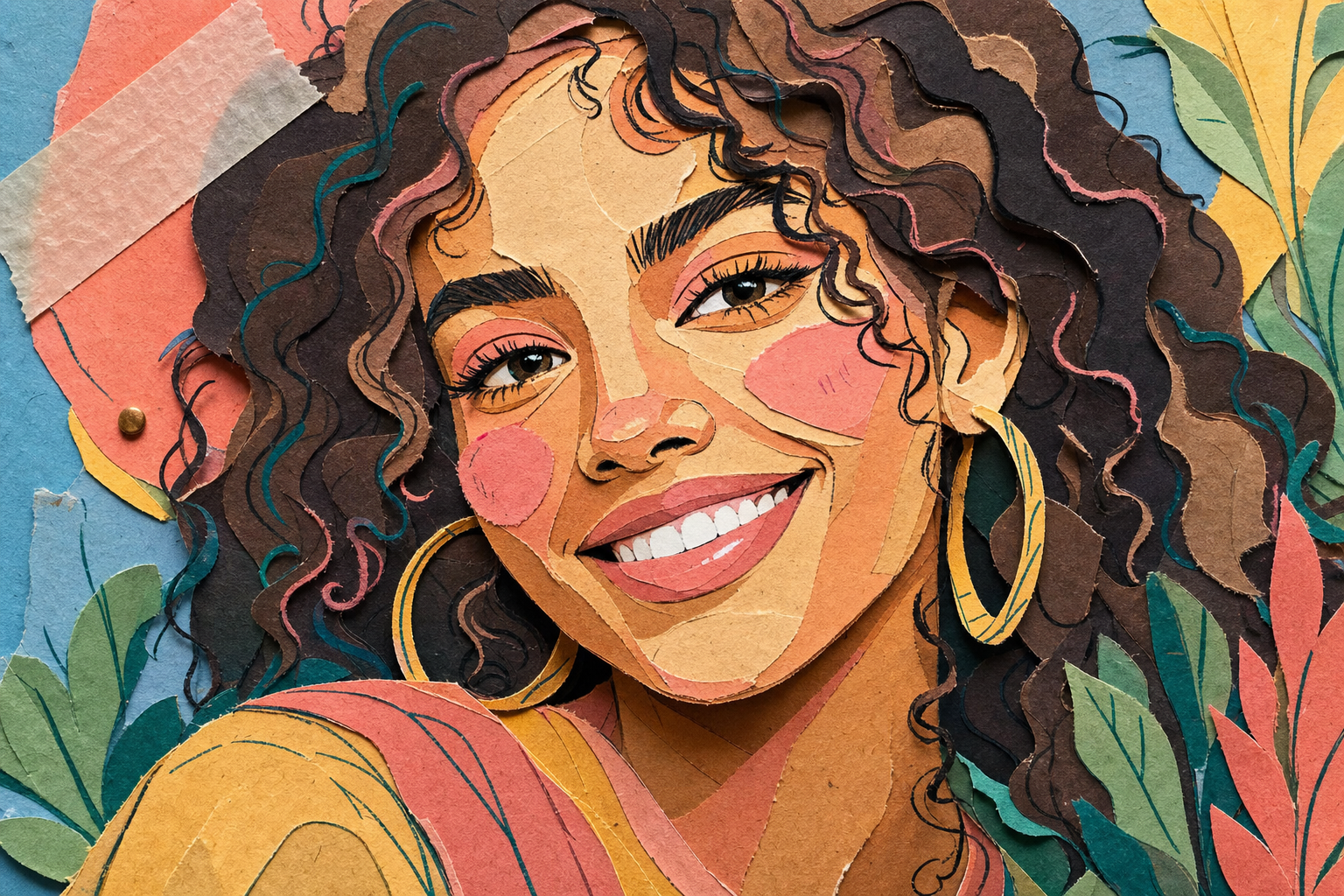
An engine-agnostic style recipe: a wide hero, proof shots across subjects, and a portable prompt.
1 hero · 3 proofs
Prompt template
{subject}, in the style of Pasteup — rendered entirely as a handmade torn-and-cut paper collage that fills the whole frame edge to edge, built from many overlapping layers of solid matte construction paper and kraft paper, each cut or torn shape casting a soft realistic paper drop-shadow so the forms float at slightly different depths; deckled torn edges and crisp scissor cuts with visible paper fiber grain; contours and key details accented with confident hand-drawn felt-marker outlines; a few seams joined by strips of translucent cream washi tape and small pressed thumbtack dimples; {palette}; warm atmospheric layered depth with soft raking light across the textured paper, tactile and dimensional, never a flat sticker or vectorSlot recipes
hero — {subject} as a full-bleed Pasteup paper collage filling the entire frame, built from many overlapping torn and cut paper layers in the palette with soft real paper drop-shadows giving stacked depth, confident marker outlines tracing the main forms, one or two translucent washi-tape strips and a pressed pin dimple at the seams, warm raking light across visible paper fiber, no margins
feature — a single {subject} detail framed tight as a Pasteup collage, fewer cleaner paper layers with crisp scissor-cut and torn edges, one marker-outlined contour and a small washi-tape accent, gentle paper shadow depth, fills the frame
avatar — {subject} as a centered square Pasteup paper-collage portrait, layered torn-paper shapes with soft drop-shadows building the face or form, marker-line accents on the key features, one tiny pin dimple, warm cream paper ground, tightly framed with no empty background
empty-state — a calm, sparse Pasteup scene — a single small {subject} cut from a few torn paper layers resting on a broad warm kraft-paper ground with gentle fiber grain, one soft paper shadow and a lone pressed pin dimple, unobtrusive and quiet, still filling the frame
illustration — {subject} as a rich multi-layer Pasteup paper-collage scene, deep stacks of torn and scissor-cut construction-paper shapes casting layered drop-shadows, marker-pen outlines and hatch accents across the forms, several washi-tape seams and pressed pin dimples, warm atmospheric light raking over heavy paper fiber, edge to edge
paper-collagetorn-papercut-papermarker-outlinewashi-tape
Credits · in the lineage of
- Cut-paper / collage illustrationTraditionThe layered torn-and-scissor-cut construction-paper technique with stacked paper drop-shadows descends from the long tradition of paper-cut and collage illustration (Eric Carle, Henri Matisse's cut-outs, picture-book papercraft).
- Henri Matisse — gouache découpée (cut-outs)ArtistThe confident scissor-cut shapes and bold pastel paper planes echo Matisse's late paper cut-out work.
- Analog paste-up / mechanical layout craftTraditionThe name and the tape-and-pin assembly nod to pre-digital paste-up: cut elements physically waxed, taped and pinned onto a board.
- Washi tape & paper-craft cultureTraditionTranslucent cream tape seams and pressed-pin accents borrow from contemporary stationery and paper-craft assembly.
A generated style is an aggregate of many influences — credit is given to the artists and traditions it draws on, not a claim of authorship.
images by gpt-image-2
Do
- · Build every subject from many overlapping layers of solid matte construction and kraft paper, each shape casting its own soft real drop-shadow so depth comes from stacked paper.
- · Let the subject fill the frame edge to edge; the paper layers, tape and pins dress the subject, never replace it.
- · Keep deckled torn edges and crisp scissor cuts visible alongside genuine paper fiber grain.
- · Trace the main forms with confident hand-drawn felt-marker outlines, used sparingly for emphasis.
- · Add translucent cream washi-tape strips and small pressed thumbtack dimples only at a few seams, as occasional craft accents.
- · Light the collage with warm raking light so the layered paper reads as atmospheric and dimensional.
Don't
- · Don't flatten the subject into a single flat vector silhouette, sticker, or loud poster shape — depth and layering are the whole point.
- · Don't render a corkboard or the sticky-note apparatus alone; the technique treats a subject, it is not the board itself.
- · Don't use glossy, plastic, glassmorphic, neon-glow, or smooth airbrushed digital surfaces.
- · Don't add lettering, captions, or busy text; keep the frame full of paper, not empty margins.
- · Don't let marker outlines, washi tape, or pin dimples become wallpaper — they stay restrained accents.
- · Don't go muddy or grey; keep the layered paper bright, warm, and clean.
try it
remix with this style
Apply Pasteup to any UI language and swap the palette — the preview takes this style's hero image.
Needs a Published language and palette to remix.