back to art styles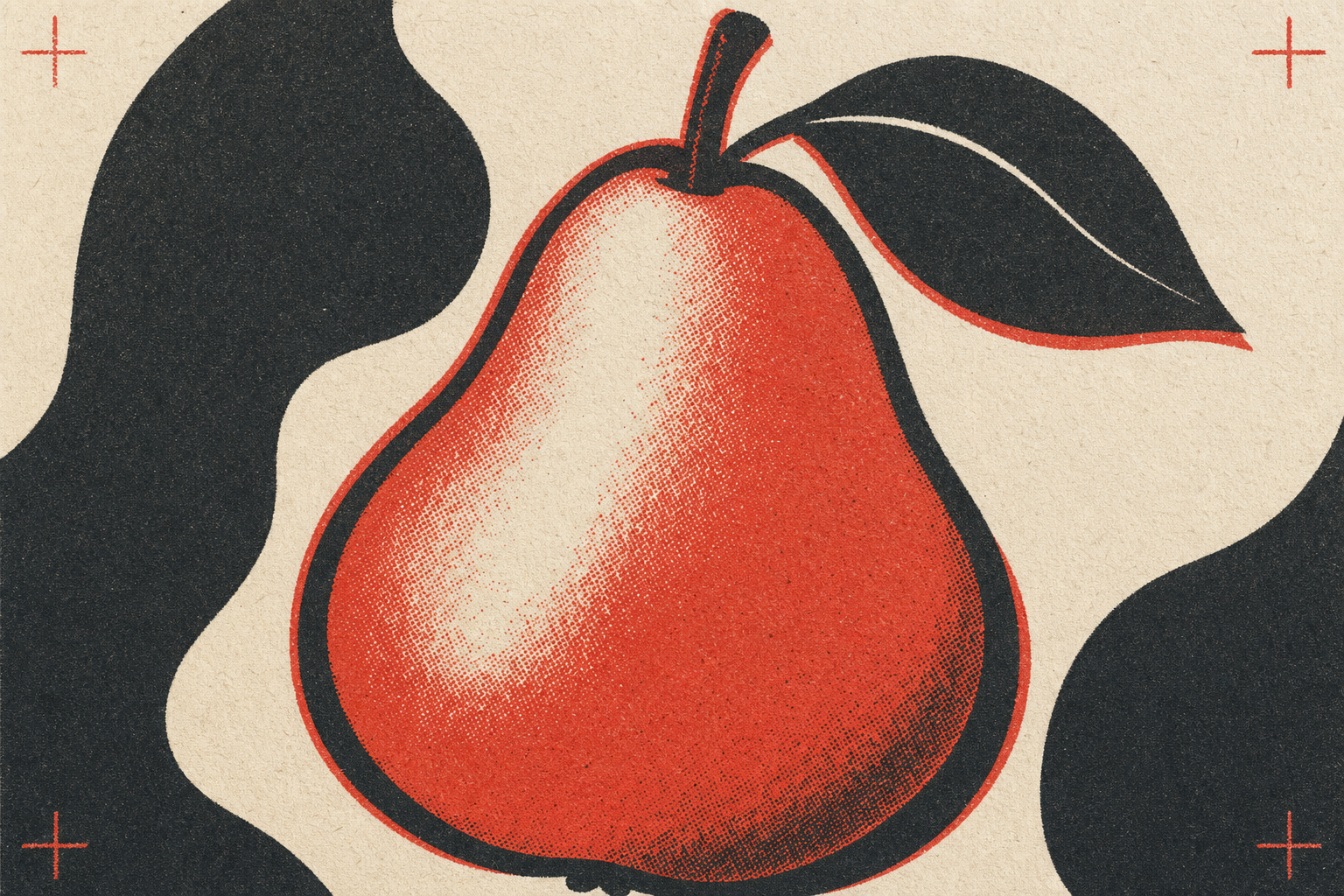
Art lane
Offset
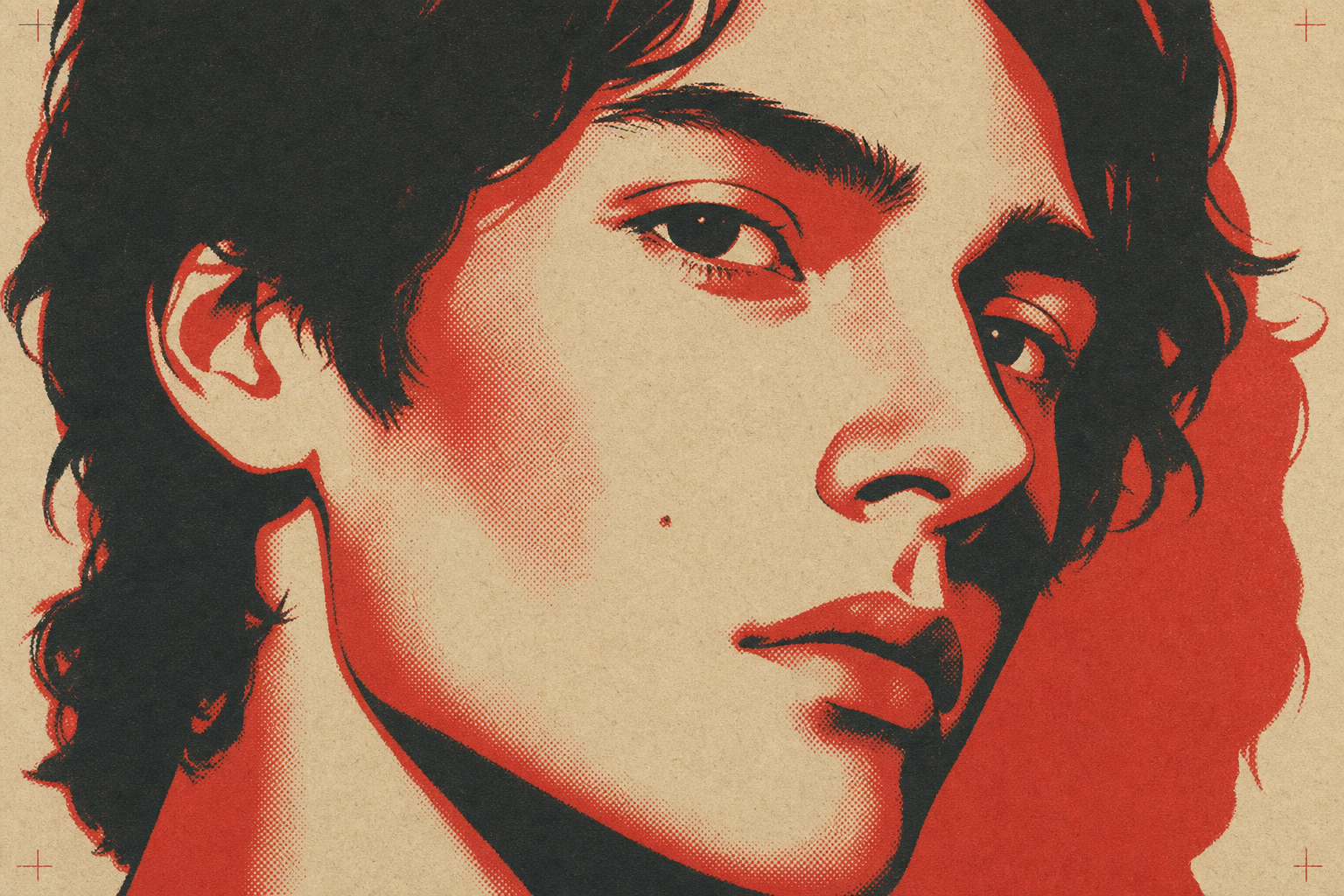
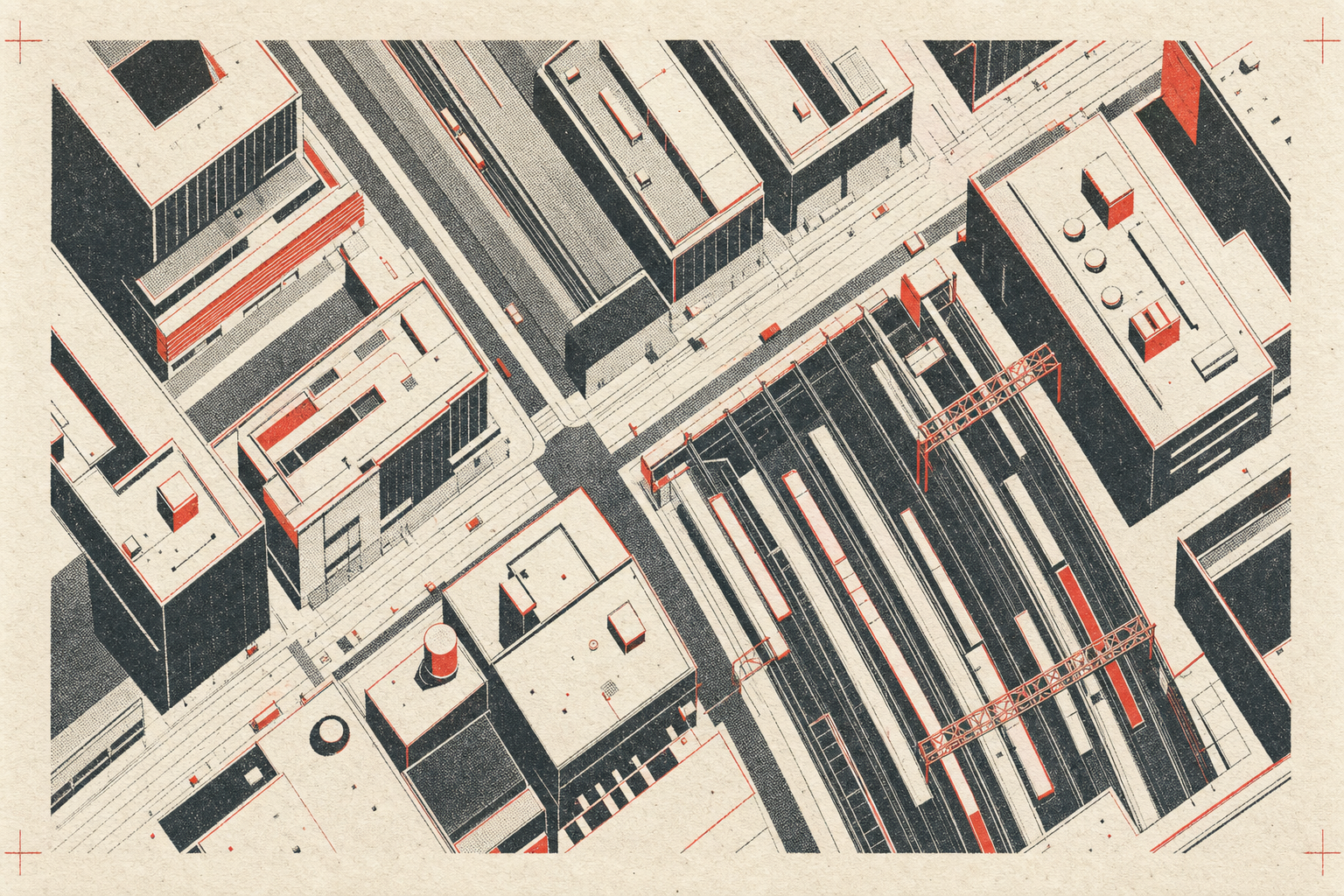
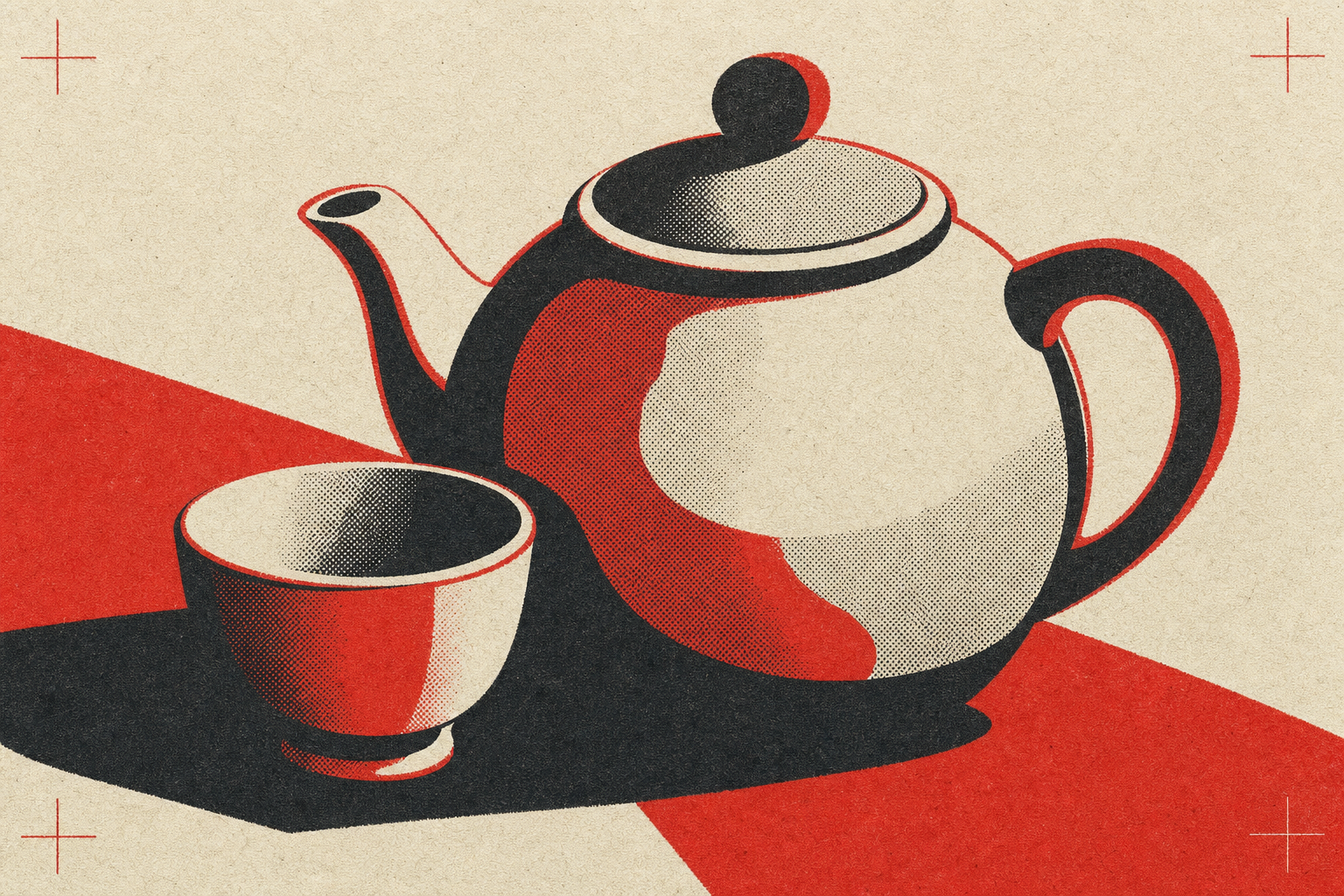
An engine-agnostic style recipe: a wide hero, proof shots across subjects, and a portable prompt.
1 hero · 3 proofs
Prompt template
A flat-layered spot-ink screenprint of {subject} on coarse uncoated paper. Render with a strictly limited set of flat printing inks drawn from {palette}: each colour laid as a solid flat field with NO smooth photographic gradients. Build form from a few bold flat tonal planes plus a soft halftone dot screen in the mid-tones; keep edges hard and graphic like a cut stencil. Introduce a deliberate slight ink misregistration so one colour layer sits a hair off the black key line. Let the paper tooth show through, with faint printer's registration crop marks at the frame corners. Bold simplified poster shapes, objective and engineered, generous negative space, high contrast. NO text, NO letters, NO logos.Slot recipes
hero — A wide architectural or environmental {subject} printed in flat spot inks with halftone mid-tones and corner registration marks; reserve roughly one third of the frame as calm bare-paper negative space for the headline overlay.
feature — A single iconic {subject} centred and full-frame, two or three flat inks, hard cut-stencil edges, soft halftone shading, slight misregistration.
avatar — A three-quarter portrait of {subject} reduced to a few flat tonal planes plus a halftone screen, hard edges, one accent ink offset a hair from the black key.
empty-state — A spare, almost-empty composition of {subject} floating in wide bare-paper negative space, one small signal-coloured mark, faint registration crosses at the corners.
illustration — A diagrammatic overhead or cutaway of {subject} built from bold flat geometric shapes and hairline rule lines, flat spot inks, halftone grain, registration crop marks.
screenprinthalftonespot-inkregistration-marksflat-poster
Credits · in the lineage of
- Swiss / International Typographic poster traditionTraditionthe objective, grid-led poster lineage whose flat planes and signal-colour discipline this technique abstracts into print.
- Risograph & screenprint printmakingTraditionlimited spot inks, halftone screens, paper tooth, and slight misregistration are the physical tells this technique reproduces.
- Armin HofmannArtisthigh-contrast flat black-and-signal poster figure-ground language echoed in the cut-stencil edges.
A generated style is an aggregate of many influences — credit is given to the artists and traditions it draws on, not a claim of authorship.
images by gpt-image-2
Do
- · Keep the ink count to two or three flat spot colours plus the paper ground.
- · Lay every colour as a solid flat field; reserve halftone dots for the mid-tones only.
- · Let a deliberate hair of misregistration and visible paper tooth carry the printed feel.
- · Hold corner registration crop marks and hard cut-stencil edges as the signature of the medium.
Don't
- · Do not use smooth photographic gradients, glossy renders, or soft drop shadows.
- · Do not exceed three inks or let the accent ink spread into a decorative wash.
- · Do not fill the whole frame edge to edge — negative bare paper is part of the composition.
- · Do not bake any text, letters, or logos into the image.
try it
remix with this style
Apply Offset to any UI language and swap the palette — the preview takes this style's hero image.
Needs a Published language and palette to remix.